Lula wins fourth term after reversing first-round deficit
The 80-year-old president secured over 64 million votes to defeat Senator Flavio Bolsonaro, who plans to challenge the result in court.
By Carlos Mendoza ·
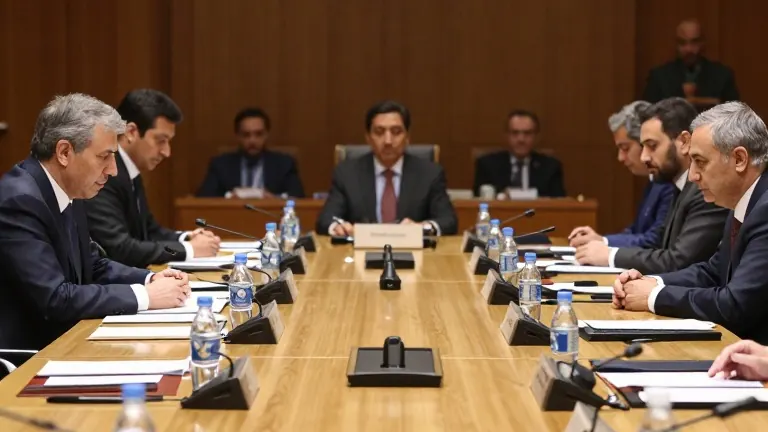
The Superior Electoral Court declared Luiz Inacio Lula da Silva the winner of Brazil’s presidential election on Sunday. The ruling came shortly after 9 p.m. Brasilia time, confirming that the incumbent had secured more than 51 percent of the vote. With counting still ongoing, Lula held over 64 million ballots against Flavio Bolsonaro’s 59 million, creating a margin of more than 4 million votes.
This victory marks a historic reversal for the 80-year-old former metalworkers’ union leader. Lula is the first politician in modern Brazilian history to win a runoff after trailing in the opening round. He previously won 45 percent of the vote on October 4, behind Bolsonaro’s 47 percent. This result grants Lula a fourth non-consecutive term, which begins on January 5, 2027. Upon taking office, he will become the oldest president sworn in since Brazil’s return to democracy.
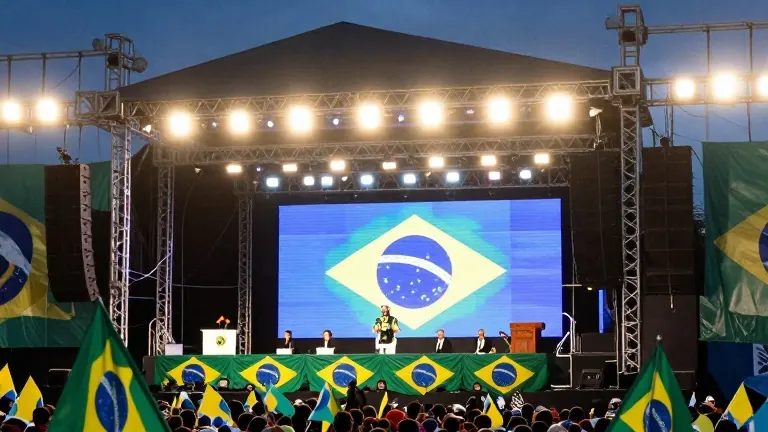
Lula addressed supporters at a podium decorated with flags, speaking through a hoarse voice and occasional coughs. He thanked voters for defending democracy while acknowledging the difficult political environment ahead. "I do not choose the Congress," he said. "It was the people who chose it, and it is with them that I will vote, work and get things approved." His next term will face the most right-wing legislative body in recent memory.
Senator Flavio Bolsonaro refused to concede defeat. He stated he would seek to annul the outcome by challenging a Supreme Court decision that extended voting hours by two hours. Both campaigns had requested additional time, and polling stations remained open until 7 p.m. Brasilia time. Bolsonaro accused the court of changing rules during the election and said he could not accept the final tally.
The voting extension followed reports of public transport suspensions in some areas. Lula’s allies accused Bolsonaro supporters of limiting bus services to discourage working-class voters. Heavy rainfall also impacted southern regions traditionally favorable to Bolsonaro. During the campaign, Lula focused on living costs, promoted a constitutional amendment to shorten the workweek, and proposed free weekend public transport. He also banned online gambling and sports betting apps in September.
The victory interrupts a recent trend of right-wing presidential gains in Peru, Colombia, Argentina, Bolivia, and Ecuador. Mexican President Claudia Sheinbaum congratulated Lula, and US Senator Bernie Sanders called the re-election extraordinary. Many of the region’s right-wing leaders have benefited from anti-incumbent sentiment and support from US President Donald Trump.
Relations with Washington remain uncertain. The Trump administration supported the Bolsonaro family and imposed 50 percent tariffs on certain Brazilian products last year to halt the prosecution of Jair Bolsonaro. Judges involved faced sanctions, and Jair Bolsonaro received a 27-year prison sentence for plotting a coup. Donald Trump Jr. criticized the voting extension on social media, while Representative Ro Khanna urged the president to respect the outcome. Lula has characterized Washington’s earlier pressure as an attack on Brazil’s judicial sovereignty.
Source: Al Jazeera